
Executive summary
In this executive summary, we present the 16 key messages that emerged from the report, referring the reader to the chapters where supporting materials can be found. The picture that emerges is the first comprehensive assessment of the geological, ecological and socio-economic processes that have shaped the Congo Basin we see today, one of the most significant and biodiverse forest ecosystems on the planet. If preserved and exploited sustainably, the Basin represents a critical Nature-Based Solution for sustainable development, conservation and climate resilience in Africa. The authors also highlight the potentially dire impacts of allowing unsustainable practices to degrade and destroy the Congo Basin forests. Finally, we provide a list of key knowledge gaps and research priorities that emerge from the report.
Section 1: The Congo Basin as a regional entity in of the earth system
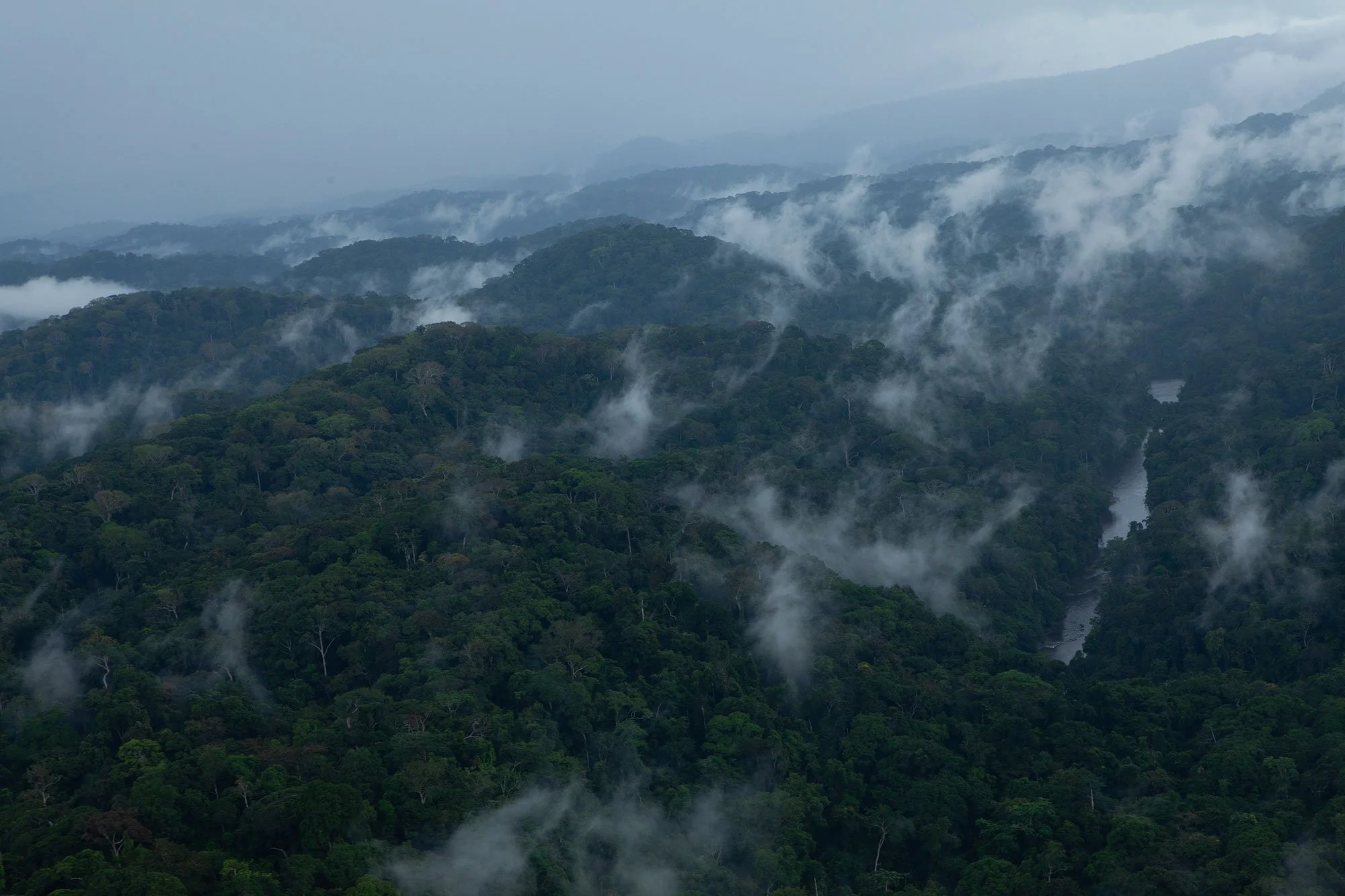
Section 1 demonstrates the Congo Basin’s role as a regional entity in the earth system, a continental scale “green engine” that cools land surfaces through evapotranspiration and drives atmospheric moisture recycling, serving as a critical natural life support system for the African continent.
KEY MESSAGE 1
The Congo Basin is the green heart of Africa sustaining ecosystem services that are critical to the continent at large.
The geology, equatorial location and extensive forests of the Congo Basin make it a critical component of Africa’s climate and hydrological systems; a continental watershed. It is the great “green heart” of Africa, pumping water, the lifeblood of the continent, thousands of kilometers all the way to Egypt and other water stressed countries of the eastern, northern and western Africa. Its forests act as a continental-scale “green engine”, cooling land surfaces through evapotranspiration and driving atmospheric moisture recycling. Approximately 60–70% of the rainfall that falls within the Congo Basin is recycled regionally, maintaining a continuous flow of moisture inland from the Atlantic Ocean. These processes generate significant rainfall both within the basin and far beyond, including the Sahel and the Ethiopian highlands.
KEY MESSAGE 2
The Congo Basin is the largest tropical carbon sink on Earth and influences both regional and global climate.
The Congo Basin is a key regulator of the global carbon cycle, acting as one of the largest and most stable tropical carbon sinks on Earth. Its vast lowland rainforests absorb significant amounts of atmospheric CO2 through photosynthesis, sequestering approximately 0.66 tonnes of carbon per hectare each year into intact forests. In addition to its forests, the Basin’s peatlands, particularly in the Cuvette Centrale, store around 30 billion tonnes of carbon. These peatlands and forest soils lock away carbon accumulated over thousands of years, playing a crucial role in offsetting global carbon emissions. Furthermore, the Congo River system transports large amounts of organic carbon from terrestrial ecosystems to the Atlantic Ocean, influencing carbon fluxes on a continental scale. The Basin’s continued function as a carbon sink is significant for moderating global atmospheric CO2 concentrations.
KEY MESSAGE 3
The Congo Basin is one of the most biodiverse ecosystems on Earth.
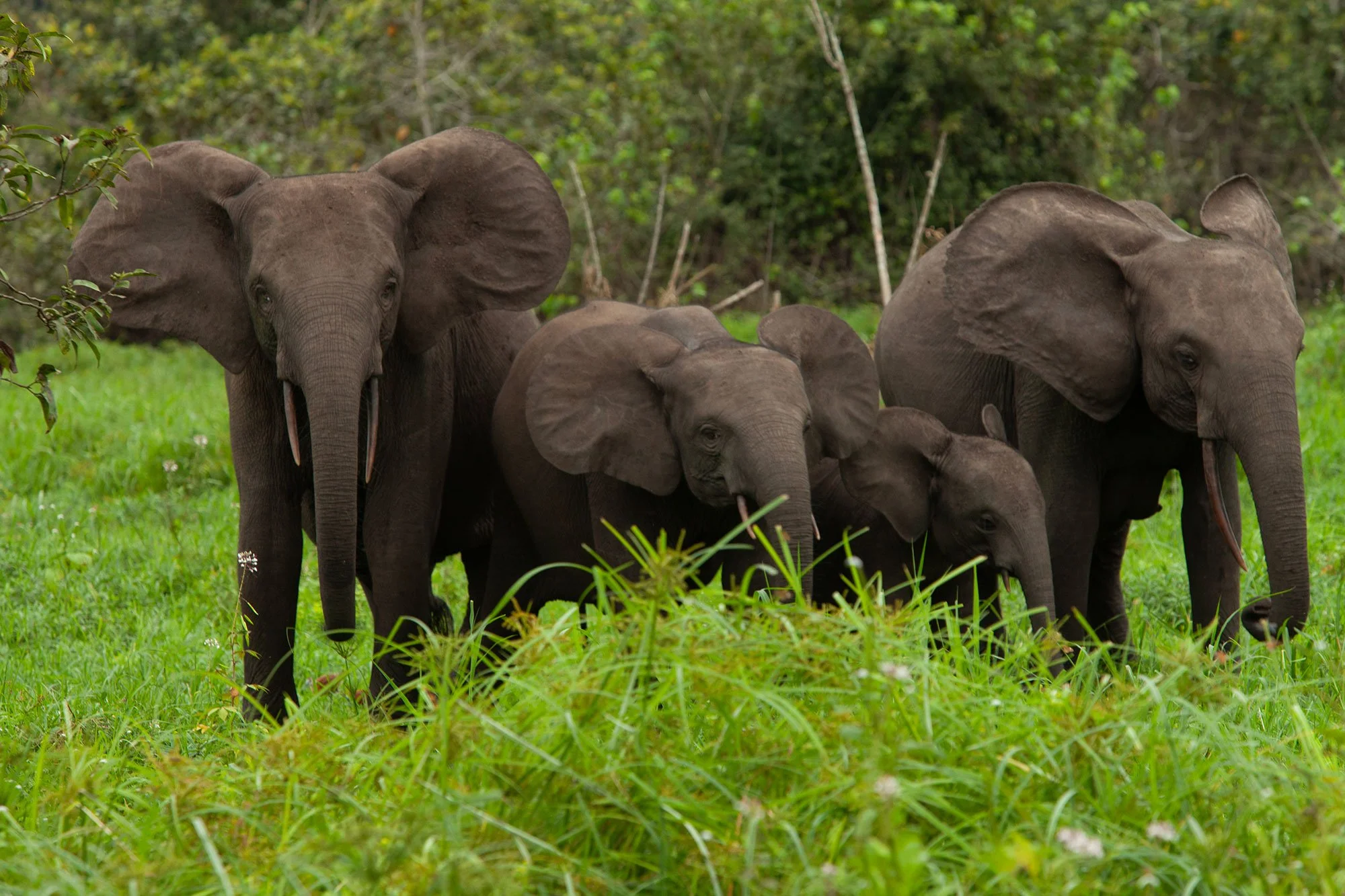
The complex geological history, warm wet equatorial climate and extensive lakes and rivers make the Congo Basin one of the most biodiverse places on Earth. Its vast lowland rainforests cover approximately 1.8 million square kilometers, but there are also extensive savanna mosaics, montane and swamp forests and the world’s largest tropical peatland complex, located in the Cuvette Centrale. This mosaic supports an extraordinary biological diversity, including over 10,000 plant species (30% endemic), more than 400 mammal species, 1,000 bird species, and 700 fish species. The biodiversity of the Congo Basin supports critical ecosystem services and is deeply intertwined with the cultural diversity of its human inhabitants, making it both a biological and biocultural reservoir of global importance. Locally it supports the livelihoods of about 80 million people while at least a further 300 million rural Africans benefit from the wider ecosystem services that depend on the Congo Basin ecosystems.
KEY MESSAGE 4
The Congo Basin is home to a rich and ancient cultural diversity.
The Congo Basin is a rich socio-ecological system. Human interaction with the Congo Basin’s ecosystems dates back at least 650,000 years, with early hominin populations adapting to its dense forests, rivers, and savannas through hunting, gathering, and small-scale forest use. Genetic evidence suggests that the ancestors of present-day hunter-gatherer groups diverged from the ancestors of other human populations around 70,000 years ago, making them among the earliest lineages of Homo sapiens to inhabit the Congo Basin. These communities developed intricate ecological knowledge systems, creating detailed classifications of plants, animals, and landscapes, passed down orally through storytelling, songs, and rituals. Today’s forest hunter-gatherers preserve many of these ancient biocultural traditions, making the Congo Basin not only a biodiversity hotspot but also a living repository of humanity’s earliest forest-based lifeways.
Section 2: Human Interaction with the Congo Basin from Prehistory to 1992
Section 2 describes human interaction with the Congo Basin ecosystem from Prehistory to 1992, the year of the Rio Earth Summit, a period that witnessed the emergence of humans as a dominant disruptive force in the Earth system.
KEY MESSAGE 5
The Congo Basin has a long history of agriculture and metalworking.
From about 4,000 years ago onwards the Congo Basin saw a gradual shift from exclusively hunter-gatherer to early agricultural societies, with the introduction of pottery and polished stone tools. With the arrival of iron and with Bantuspeaking communities moving in from the north, there was an increasingly marked impact on the Congo Basin forests from 2,500 years ago onwards. Various traditional methods of ecosystem regulation, including sacred forests and taboo species were employed by these peoples.
KEY MESSAGE 6
The Congo Basin’s ancient kingdoms fostered regional and global trade network.
By the last millennium, polities (kingdoms) had emerged in some areas, and the region was linked to wider regional trade networks. The arrival of European explorers and traders from the 15th century onwards resulted in increased trade, while new technologies such as guns resulted in increased ecological impact, although traditional values and cultural ecosystem management techniques continued to operate. New diseases introduced at this time decimated human populations, initially in coastal regions, later penetrating into the interior of the Congo Basin along trade and logistical routes.
KEY MESSAGE 7
The Congo Basin experienced deep and lasting negative social and ecological impacts of colonialism.
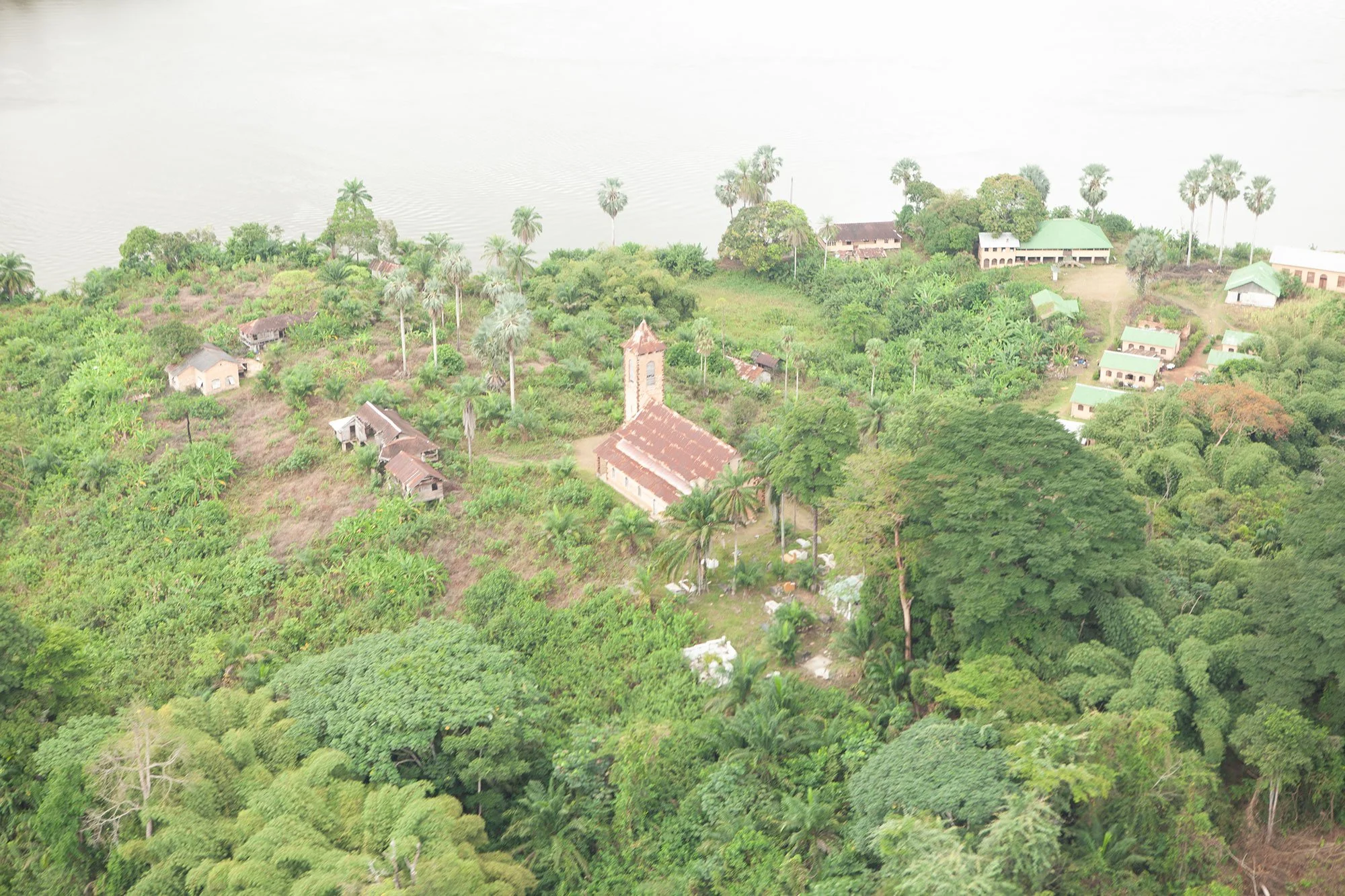
The period marking the colonial conquest of Africa and the industrial frontier, from the 19th to mid-20th century, led to an era of huge social and ecological damage. Large-scale forced relocation of villages completely changed the human landscape with profound implications for the Congo Basin’s ecosystems. Country borders were decided arbitrarily without taking sociological realities into account (Figure 7). In some cases, these borders separated populations belonging to the same tribe into different countries (e.g. Cameroon, Gabon, Equatorial Guinea). Forced labour was used to exploit mineral and timber resources, which were shipped to Europe for processing, establishing the economic reality that persists to today of Africa as a source of cheap raw materials that have developed the rest of the world. As African development came to be seen as a threat to species and ecosystems the colonial authorities imposed their view of “fortress” conservation, creating protected areas by banishing human populations through force.
KEY MESSAGE 8
The Congo Basin’s era of independence brought new political visions for development.
The period between 1960 and 1992 saw the progressive independence of the Congo Basin nations, rapid urbanisation and the emergence of a political vision championing the principles of sustainable development on the road to the Rio Earth Summit in 1992. Logging and mining remained the principal economic activities but were largely replaced in the Western Congo Basin countries by oil.
Section 3: Social-ecological Transformations: First steps towards sustainable development
Section 3 documents social-ecological transformations and the first steps towards sustainable development in the region following Rio, where for the first time the Congo Basin leaders engaged the region on a more sustainable development pathway.
KEY MESSAGE 9
The Congo Basin has seen transformative change since 1992.
Since the early 1990s the Congo Basin nations have experienced significant socialecological transformations, including the beginning of the political transition to multi-party democracy and first steps towards sustainable models of development. Several leaders of the Congo Basin countries took strong positions at the Earth Summit in Rio in 1992 and acted on their commitments. Regional organisations were created and given formal mandates to coordinate forestry and climate policies. The forestry industry became subject to much stricter social and environmental governance, including certification, and in-country processing resulted in improved economic returns and increased job creation. Other sectors (e.g. mines, oil) have tended to lag behind.
KEY MESSAGE 10
Novel approaches to environmental stewardship and sustainable use are urgently needed, building on already emerging paradigms.
Increasing political attention to biodiversity benefits and improved community involvement in local resource management is delivering positive results for biodiversity and sustainability, but these need to be rapidly scaled up and invested in for the long term. National governments are taking proactive stances on biodiversity and climate responsibilities, adaptation and forward planning, yet more joined-up policy on agricultural development and food systems is needed to ensure biodiversity and forest security, as well as food security and health for growing populations.
KEY MESSAGE 1 1
The Congo Basin has solutions within reach but these need strategic investments by governments, private sector and the international community.
The eradication of low value-added and illegal forms of extractive use of natural resources and the promotion of sustainable use regimes can transform their contribution to national economies and promote biodiversity, climate and human health benefits. Strengthening governance, and harnessing emerging technologies in clean energy, digital information, agriculture, timber transformation and pollution reduction could be transformational in the sustainability and economic growth of the region. Raising technical skills and capacity within Congo Basin societies, especially the youth, could put the Congo Basin on track to a better future for its citizens and environments.
Section 4: Social-ecological Transformations: First steps towards sustainable development
Section 4 represents a solution space where sustainable pathways for the Congo Basin forest ecosystem are identified, discussed and compiled into a theory of change for the sustainable development of the region that improves quality of life and prosperity, maintains ecosystem services and natural capital, and promotes climate resilience.
KEY MESSAGE 1 2
Sustainable development of the Congo Basin is dependent on effective governance.
To attract the responsible investors and affordable finance needed to drive sustained economic growth, continued and accelerated improvements in democratic process, governance, rule of law, justice and equity are needed in the Congo Basin nations. Political stability and elimination of illegality in the natural resource extraction industries are crucial to encourage international confidence and investment. Furthermore, integration and strengthening of local community involvement and rights in integrated spatial plans are also needed. International agreements such as the African Union’s Agenda 2063, the UN Sustainable Development Goals (SDGs) can help to chart a path but need to be adapted to local circumstances through regional leadership.
KEY MESSAGE 13
Success of sustainable development and conservation in the Congo Basin depends on new models of financing at scale.
There is a need to foster affordable, dependable finance and equitable investment in sustainable development for the Congo Basin nations, to provide dignified, sustainable livelihoods for their people, while continuing to supply the global ecological services that benefit all of humanity. Preservation and enhancement of Nature-Based Solution provides a critical foundation to boost sustainable development and climate resilience of nations and economies. The Congo Basin countries are leading the world through the development of economies that depend on sustaining ecosystem services, banishing the model of using Africa simply as a source of cheap raw materials that provision nations far from the continent, as was the case during colonial rule.
KEY MESSAGE 14
The Congo Basin needs investment in and nurturing scientific and technical capacity and innovation.
Harnessing all possible technological advances to optimise the preservation, management of natural resources and monitoring of local and regional changes is critical for the future of the Congo Basin. It is hard to manage something that is not well understood, and many knowledge gaps remain. There is a need to promote the formal training and capacity building for scientists, sociologists, and natural resource managers to establish effective management systems that maximise ecological resilience and benefits for the region’s economies and people and to promote interdiscliplinary collaboration. The Science Panel for the Amazon and its precursor, the Large-Scale Biosphere-Atmosphere Experiment Program, provide powerful models that can be adapted to the Congo Basin.
KEY MESSAGE 1 5
The Congo Basin depends on building resilience by investing in effective protection and restoration of its natural capital.
Africa is the continent that is most susceptible to climate change because of the vulnerability of its more arid ecosystems and lack of technological and financial capacity of adapt. The ecological stewardship and environmental resilience of the Congo Basin is critical for the region and for many other parts of Africa, whose weather patterns are impacted by moisture from the “heart and lungs of the continent”, the Congo Basin rainforests. Nature preservation and Nature-Based Solution need to be integrated into ecosystem management, urban environments and national planning, to ensure maximal climatic resilience for ecosystems, agriculture and people in the coming century. This is by far the most efficient and effective way of reducing the costs of adaptation, while contributing to global climate change mitigation.
KEY MESSAGE 1 6
The Congo Basin stands at a decisive crossroads.
It is the world’s second-largest tropical forest system, a vast carbon sink, and home to unparalleled biodiversity, but it is also a region of rapid population growth, persistent poverty, weak governance and competing demands for development. Strengthened governance, equity and justice; reliable finance and sustainable economies; technology and capacity; and ecological stewardship and stability are the four key foundations for the future emergence and stability of the region.